
Pune’s Northern Central Business District – The Next Growth Chapter

– by Anil Pharande, Chairman – Pharande Spaces
Pune has always been a city full of surprises. What started as a city’s retirement destination – remember Pensioner's Paradise? – has become one of India’s top IT hubs. Now, Pune's northern belt is following suit. Quietly, but very convincingly.
What is the NCBD?
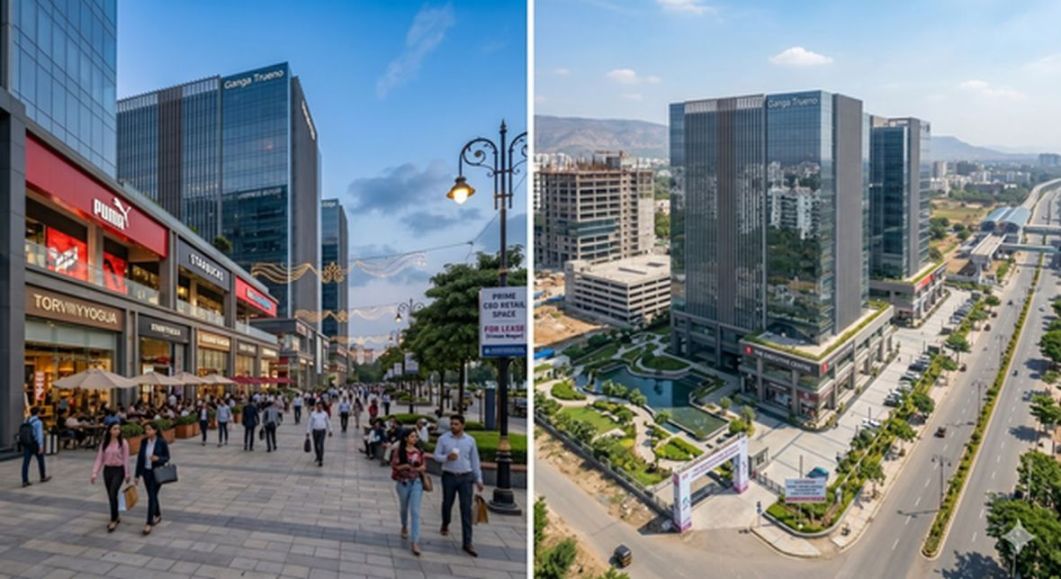
What most serious developers and institutional investors now call Pune's Northern Central Business District (NCBD) is the stretch running through Baner, Balewadi, Wakad and into the outer ring of Hinjewadi. It is not gazetted by that name anywhere officially – but ask any Grade-A office developer where the action is, and they will unfailingly mention this corridor.
What Makes It Unique?
The traditional CBD – Koregaon Park, Bund Garden, and Camp – has long since matured into prime territory. In simple terms, this means they are high on values and short of space. In the last three years, the eastern SBD around Kharadi and Viman Nagar has been the engine of Pune’s commercial office leasing scene, with the area accounting for nearly 45% of net absorption in Q1 2025 alone.
Both corridors are remarkable, but they are also largely saturated. And in real estate terms, saturation means only two things – some strategic and limited redevelopment potential, and look elsewhere for growth.
The NCBD corridor is different – it still has plenty of 'upside'. It has land availability and density, which is a rare combination. There’s a whole workforce sitting here that actually wants shorter commutes. Ask any IT guy staying in a 2BHK in Wakad why he didn't choose Kothrud or Hadapsar, and the answer is almost always the same: “What matters most is getting to work and back.”
The entire NCBD story is based on the thesis that where people live and work are close enough to each other to open the next Puneri real estate goldmine.
The Infrastructure Turning Point
This is where it gets interesting. Pune Metro Line 3 (23.2 km) The 23.2 km Line 3 connecting Hinjewadi to Shivajinagar via Balewadi and Baner will be ready for partial commercial operations from June 2026, and full operations for all stations from October. It is India’s first metro on the public-private partnership model with Tata-Siemens JV backing. The project took more than a decade to build and cost INR 8,313 crores.
The impact on real estate is already priced in – but not entirely. A commercial hub of about 1.9 million sq ft at the Balewadi interchange will be developed on transit-oriented lines. Once the metro is up and running regularly, that footprint will draw anchor tenants, co-working operators and retail brands that have been waiting for this very moment.
PMRDA is also developing the 50 km road along the metro line from Maan (depot) to Shivajinagar. Concrete reconstruction, better drainage, wider lanes. The positive impact on commute times is not just theoretical anymore, it’s measurable.
Commercial RE Boom
Serious commercial investments are flowing into Pune's northern corridor even before Metro Line 3 gets launched. In the first quarter of 2026 alone, Pune’s commercial real estate sector saw investments amounting to more than INR 600 crore. Pune was among the top three Indian cities for absorption of commercial real estate in 2025, and the trend is likely to persist in 2026-2027.
The Baner-Balewadi-Wakad corridor, which we can call the heart of the NCBD, has large IT parks, MNC campuses, and a growing GCC (Global Capability Centre) ecosystem. It is important to note that GCCs are not back office functions any longer.
Companies like Entrata have already established full GCCs in Pune’s premium commercial zones and the NCBD corridor is the next to see this sort of tenancy. These are multi-year leases, hundreds of staff, high quality fitouts. The grade of commercial office occupiers you find here are the kind that lift the whole micro-market. New supply is keeping pace with ambition.
The Residential Layer
Contrary to popular opinion, commercial real estate is not an island fed by residential density, and vice versa. Balewadi High Street is strategically located between Baner and Hinjewadi. Property rates here have been rising for the past five years. Limited land stock, strong demand for rentals from professionals based in Hinjewadi, and new projects in the premium residential segment are causing relevant inventory run out faster than many had anticipated.
With proximity to Hinjewadi and the NCBD belt, Wakad is also offering the highest rental yield of about 5.2% among Pune’s western micro-markets. That is a number serious investors will look at, especially when average capital values in western Pune are continuing to be below INR 8,000 per sq ft for most residential assets.
Why This Matters to Developers
At Pharande Spaces, we look closely at land acquisition data – and the NCBD corridor ticks most of the boxes that most of Pune's emerging zones do not. That includes committed and partly delivered infrastructure spending and real-time occupier demand. Residential density is the work force pipeline. And the institutional capital – CapitaLand alone has committed INR 19,200 crore into Maharashtra by 2030 – validates the macro thesis.
Pune’s total commercial stock is expected to add 11 million sq ft of new supply in 2026, with vacancy levels likely to remain relatively contained at around 11%. This is a healthy market – not overdeveloped, and not in short supply.
The NCBD is not only a bet on future growth – it is already being developed. The Metro is the last step in the process of turning a strong micro-market into a defining one. Developers who get in front of the curve now, before full metro operations change pricing permanently, will look like accurate future gazers in just three years. The others will talk about what they almost did, but didn't do.
About the author:
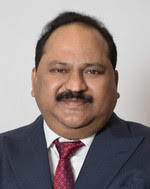
Anil Pharande is Chairman of Pharande Spaces, a leading real estate construction and development firm famous for its township projects in Greater Pune and beyond. Pharande Promoters & Builders, the flagship company of Pharande Spaces and an ISO 9001-2000 certified company. Established in 1994, the company has built a substantial footprint over three decades by transitioning from standalone bungalows to premium gated communities and massive integrated townships and high-grade commercial office and retail projects. They are widely recognized for their focus on systematic town planning, green living concepts, and high-quality construction .