

Indian Researchers Identify Thermal Fingerprints of Solar Storms Over 30 Years
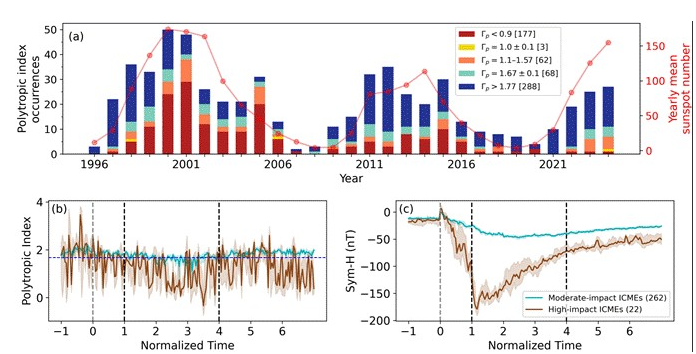
Researchers examined atmospheric temperature changes caused by geomagnetic storms triggered by solar eruptions such as coronal mass ejections (CMEs) and solar flares. The findings show that each storm leaves a unique thermal fingerprint in the thermosphere, allowing scientists to better understand how Earth’s atmosphere responds to varying levels of solar activity.
The study indicates that these thermal signatures can serve as reliable indicators of storm intensity and evolution, helping scientists predict the impacts of space weather with greater accuracy. Improved forecasting could provide earlier warnings for disruptions to satellites, GPS navigation, radio communications, aviation, and power grids.
By compiling and analyzing three decades of observations, the research establishes one of the most comprehensive records of the Earth’s atmospheric response to solar storms. The findings are expected to strengthen predictive models and enhance preparedness for extreme space weather events, which are becoming increasingly important as reliance on space-based technologies grows.
The research marks a significant step toward developing more accurate and reliable space weather forecasting systems, helping safeguard critical infrastructure and satellite operations against the effects of solar activity.