
Oasis Fertility Hosts Janani Dialogues 2026, Opens National Conversation on Building a Family-Friendly India
Public health experts, government, psychologists, HR leaders, child-welfare voices and reproductive medicine specialists come together to examine why family building in India is becoming harder to plan for, and what each sector can do about it
Oasis Fertility hosted the inaugural edition of Janani Dialogues, a public-interest forum on reproductive wellbeing, preventive awarenessand informed family building. Themed “The Parenthood Paradox: Building a Family-Friendly India,” the forum brought together voices from public health, government, psychology, child welfare, corporate human resources and reproductive medicine to examine a question increasingly on India's mind: What does it take to build a Family-Friendly India?
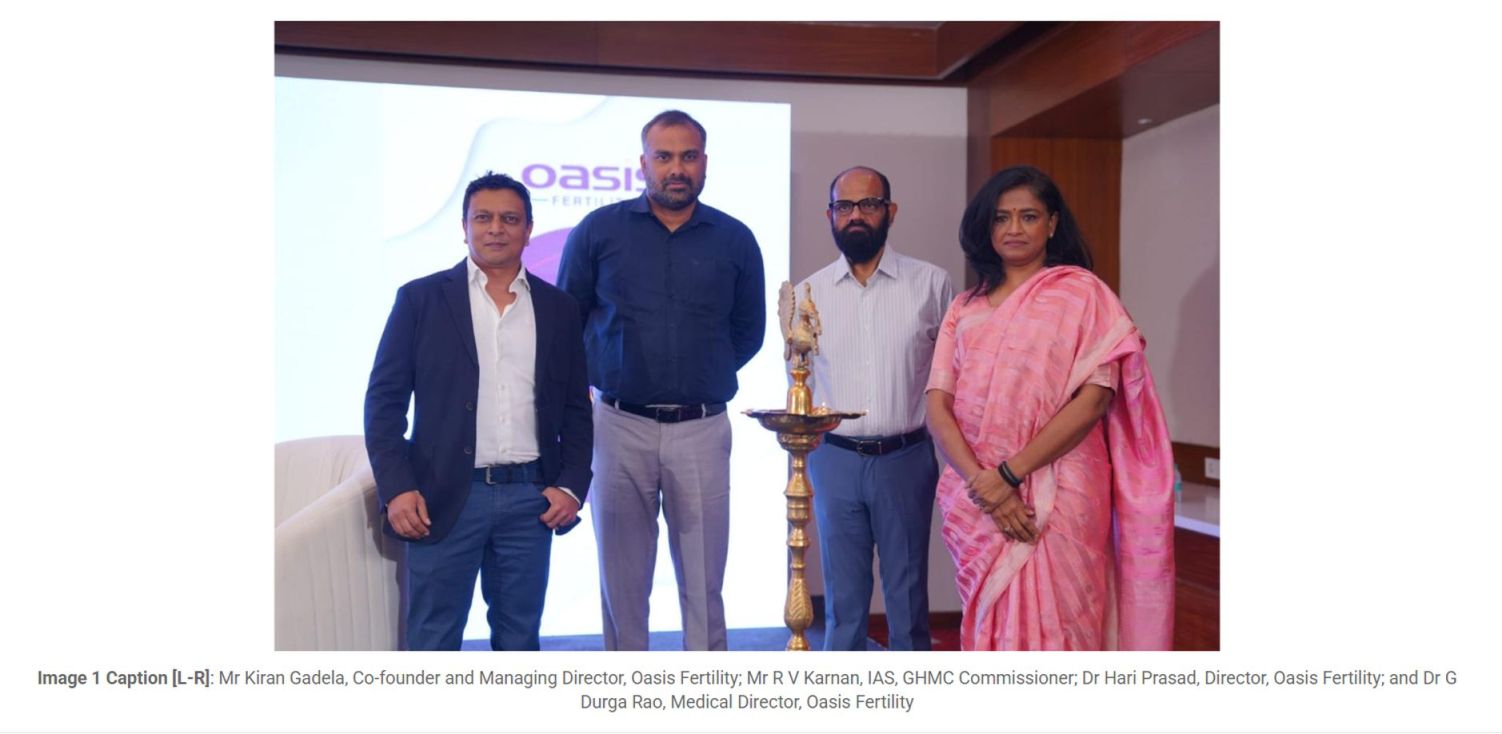
The forum was inaugurated by Sri R. V. Karnan, IAS, Commissioner, Greater Hyderabad Municipal Corporation, as Chief Guest, and moderated by Dr. Krishna Chaitanya Mantravadi, Scientific Head, Oasis Fertility. The conversation was carried live to several other cities on the same day, opening a Hyderabad-anchored dialogue to a national audience.
Discussions centred on a quiet but significant shift in how India builds families. It is concerning that the country’s Total Fertility Rate is already below the replacement level. Speakers noted that this demographic transition is driven less by delayed marriage and more by couples consciously postponing parenthood while prioritising education, careers, financial security and personal aspirations. As lifestyles evolve, reproductive biology continues to follow its own timeline, making fertility awareness and preventive healthcare increasingly important and notably many factors leading to fertility issues are preventable.
A central theme was the Parenthood Paradox itself: the widening gap between changing life aspirations and unchanging biological realities. Panellists were clear that the objective was not to influence anyone's personal choices, but to enable informed decisions through timely awareness and preventive care. The dialogue also examined the economics of parenthood, with speakers framing affordability, financial planning and supportive public policy as critical enablers rather than private burdens. Reinforcing the theme of shared parenthood, the forum called for greater participation of fathers and stronger support from workplaces, educational institutions and communities.
Addressing the gathering, Dr. Durga G. Rao, Co-founder and Medical Director, Oasis Fertility, said, “Family building in India is quietly becoming harder to plan for, not because people don't want families, but because the biological clock, the economics of parenthood and the demands of modern careers are pulling in different directions. Janani Dialogues brings together government, healthcare, employers, psychologists and communities on one platform, so that families are not left to navigate these choices alone.”
The inaugural panel featured Ms. Sumalatha (Child Development Project Officer, WD&CW Dept., Govt of Telangana), Dr. Kausar Shaik (Counselling Psychologist), Dr. Mamatha Raghuveer (Director, Tharuni Foundation), Ms. Upasana Aneja (Human Resources Leader), Prof. Rajan Shukla (Dean, Public Health Practice and Community Engagement, PHFI Institute of Public Health Sciences) and Dr. Durga G. Rao (Co-founder and Medical Director, Oasis Fertility).The session included live, anonymous audience polls, with panellists voting alongside the audience and results displayed on screen in real time, reinforcing that the forum was a genuine dialogue rather than a lecture.
Oasis Fertility was explicit that Janani Dialogues is a public-interest platform, not an IVF or fertility-treatment campaign. It promotes no product or procedure and does not advocate that any individual should have children. It focuses instead on the structural factors, economic, medical, workplace and social, that stand between couples and the families they hope to build, and on what government, employers, healthcare providers and communities can each do about them.
The event concluded with the Janani Declaration, six guiding principles centred on lifelong reproductive health, informed choices, shared responsibility, dignity for every pathway to parenthood, balancing career and family aspirations, and a collective commitment to building a Family-Friendly India. Oasis Fertility reaffirmed its commitment to taking Janani Dialogues forward as an annual public-interest initiative, through policy engagement, research and multi-sector collaboration aimed at improving awareness, accessibility and affordability in reproductive health and family building across India.