
Open the Records, Let the Truth Come Out”: Delhi Press Conference Demands Transparency in SEZ–Non-SEZ Land Case
# Speakers call for disclosure of government records, disposal of pending RTI applications and clarity on land transfers and project approvals
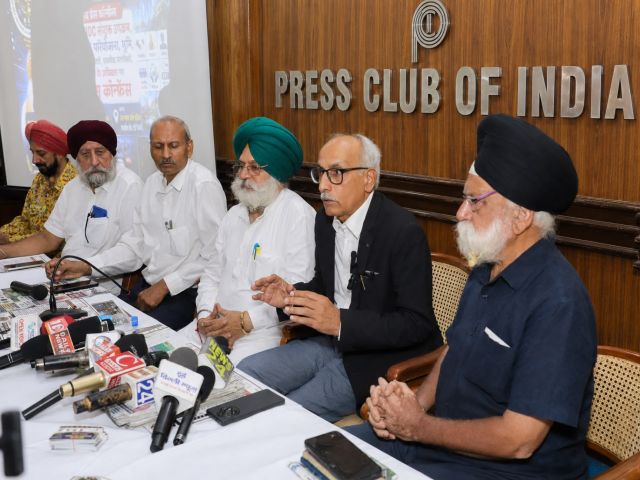
A press conference at the Press Club of India in New Delhi has brought renewed attention to questions surrounding nearly 7,200 acres of land in Haryana’s Jhajjar and Gurugram districts linked to SEZ and non-SEZ projects.
International human rights defender Sardar Charanjit Singh and his associates called on the Haryana government and concerned authorities to make public the original records relating to land acquisition, change of land use, transfer of government land and approvals granted for the project.
Senior Supreme Court advocate Balraj Malik also urged citizens to raise public-interest issues through constitutional and peaceful means. He stressed that democracy extends beyond elections and depends equally on citizens’ right to question institutions and seek accountability.
Sardar Charanjit Singh said the campaign is not aimed at targeting any individual or company, but at establishing the facts through official records. The demand, he said, is straightforward: “We do not want allegations; we want government documents.” Among the records sought are details of stamp duty paid during land transactions, any government exemptions or reimbursements, the transition from an SEZ project to a non-SEZ project, and the approvals granted in connection with such changes.
The press conference also raised questions regarding the substantial increase in the reported value of the land. Based on documents presented during the briefing, it was pointed out that land was reportedly purchased at around ₹20–22 lakh per acre, while the value of developed land was subsequently indicated at as much as ₹24.20 crore per acre. Speakers stressed that this comparison is being raised as a question, not as an established fact, and that the complete picture, including the interests of the original land sellers, should be established through official records.
The speakers further sought disclosure, wherever legally permissible, of the joint venture agreement with HSIIDC, records relating to the transfer of government land, land valuation documents, and relevant government file notings and approvals. They also called for clarity on compliance with the reported provision requiring 70% employment for Haryana residents in the project.
The press conference called for the expeditious disposal of pending applications filed under the Right to Information Act, 2005, within the prescribed timelines. The speakers maintained that if the entire process of land acquisition, transfer and subsequent project changes was carried out in accordance with the law, making the relevant government records public would help address the questions being raised.
Sardar Charanjit Singh reiterated that the objective is not to target any individual or institution, but to ensure transparency, accountability and access to verified information. He called for the statutory records relating to the SEZ–non-SEZ land matter to be placed in the public domain and said that if an examination of the documents establishes any genuine legal or administrative irregularity, the matter should be subjected to an impartial inquiry.